 Makkah Travel
From Jabal Omar to the Holy Mosque: Exploring Makkah from DoubleTree by Hilton
Team Holidays Master · October 7, 2026
Explore Makkah from DoubleTree by Hilton Jabal Omar, with a guide to Masjid al-Haram, the Kaaba, Jabal al-Nour, Jabal Thawr, Arafat, Mina, and other important Islamic landmarks.
Makkah is a city where religious history, pilgrimage, and modern hospitality come together. While Masjid al-Haram is the main destination for most visitors, the surrounding city contains numerous places connected with Islamic history, Hajj, Umrah, and the development of Makkah.
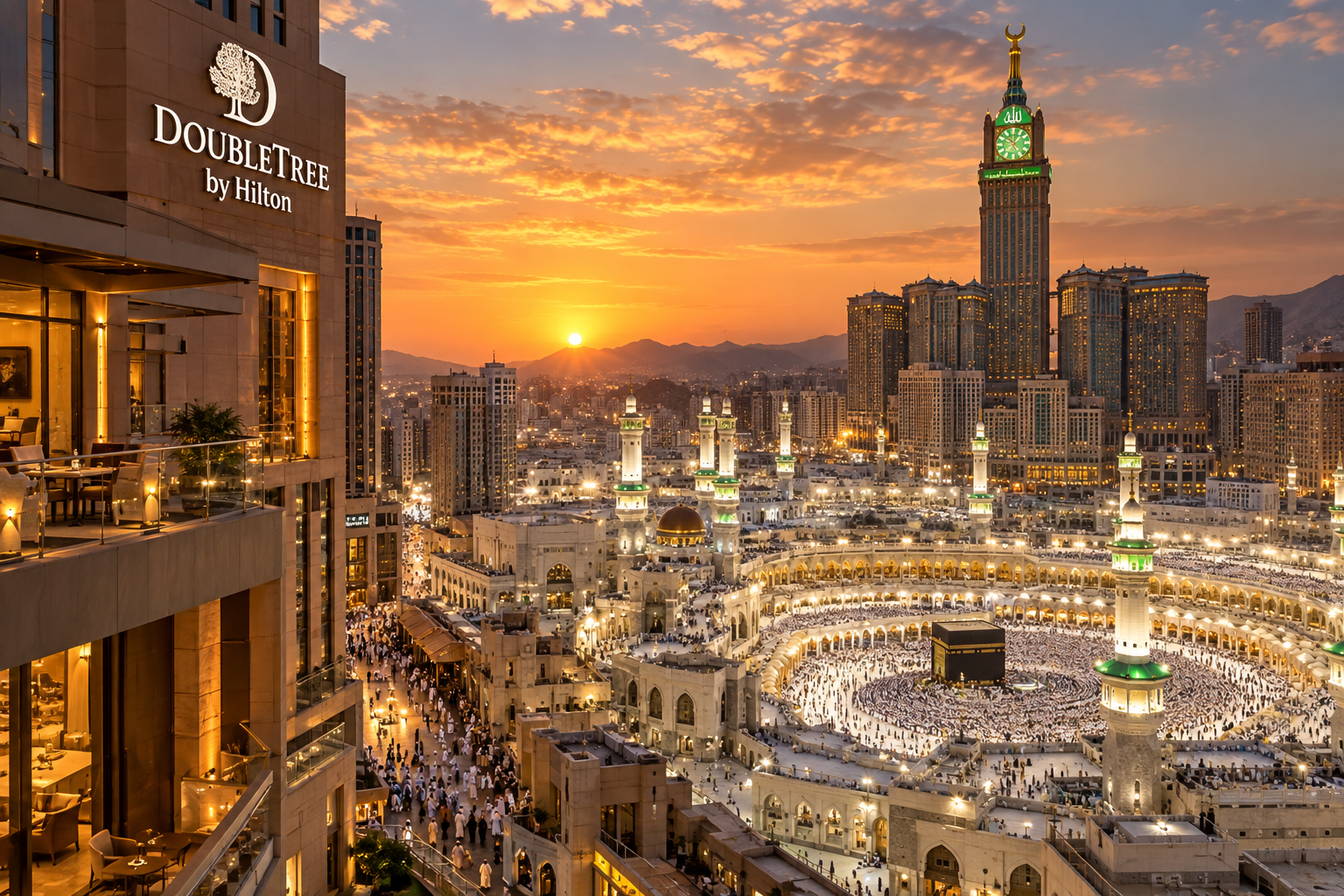
For travellers staying in the Jabal Omar area, choosing accommodation close to the Holy Mosque can make it easier to organise prayer, sightseeing, meals, and rest. DoubleTree by Hilton Jabal Omar Makkah is positioned in the Jabal Omar development, providing travellers with access to the central Makkah area.
Visitors planning their accommodation can explore the DoubleTree by Hilton Jabal Omar Makkah hotel page on HolidaysMaster.
Masjid al-Haram and the Kaaba
The most important destination for visitors to Makkah is Masjid al-Haram, the holiest mosque in Islam and the location of the Kaaba.
For pilgrims performing Umrah, the mosque is the centre of the journey. Tawaf around the Kaaba, prayer, and time spent worshipping within the Haram are central parts of the experience.
Staying in the Jabal Omar area can be particularly useful for travellers who want to remain close to the central Haram district. However, the area can become extremely busy during Ramadan, Hajj, and peak Umrah periods, so visitors should allow additional time for walking and transportation.
Abraj Al Bait and the Makkah Clock Tower
One of the most recognisable landmarks in Makkah is the Abraj Al Bait complex, commonly identified by the Makkah Clock Tower.
Located beside Masjid al-Haram, the complex combines hotels, shopping areas, restaurants, and other facilities. Travellers can visit the surrounding area after prayer to shop for essentials, enjoy a meal, or experience one of the most recognisable parts of the modern Makkah skyline.
The Clock Tower area is also useful for visitors looking for practical services during an extended stay in the city.
Jabal al-Nour and Cave Hira
For travellers interested in Islamic history, Jabal al-Nour is one of the most significant locations around Makkah.
The mountain is home to Cave Hira, traditionally associated with the first revelation received by Prophet Muhammad ﷺ. This makes the location particularly significant to visitors wanting to understand the history of revelation and the beginnings of Islam.
Reaching Cave Hira requires a challenging climb. Visitors should consider their physical ability, weather conditions, suitable footwear, and water supply before attempting the journey.
It is better to approach the visit as a historical and reflective experience rather than trying to rush up and down the mountain.
Jabal Thawr
Another important site connected with Islamic history is Jabal Thawr.
The mountain is associated with the Hijrah, when Prophet Muhammad ﷺ and Abu Bakr رضي الله عنه travelled from Makkah towards Madinah. The Cave of Thawr is traditionally connected with an important part of this journey.
Like Jabal al-Nour, the mountain involves difficult terrain, so visitors should plan their visit carefully. Weather can also have a significant effect on the experience, particularly during the hotter months.
For anyone interested in the history of Islam, Jabal Thawr provides an opportunity to learn about an important period in the early Muslim community.
Mount Arafat
Mount Arafat, also known as Jabal al-Rahmah, is one of the most important locations associated with Hajj.
The Plain of Arafat is where Hajj pilgrims gather on the Day of Arafah, which is one of the central stages of the pilgrimage.
Although Umrah and Hajj are different forms of pilgrimage, learning about Arafat can help visitors understand the wider geography and rituals associated with Hajj.
Travellers visiting Makkah outside the Hajj season can still explore the area's historical and religious significance, subject to current access arrangements.
Mina and the Jamarat Area
Mina is another major location associated with Hajj. The area is known for its large tent city and its role during several stages of the pilgrimage.
The Jamarat Bridge is located in Mina and is associated with the ritual of stoning the pillars during Hajj.
For visitors interested in understanding the Hajj route, learning about Mina and Jamarat provides useful context about how the different locations around Makkah connect to the pilgrimage.
Access to certain areas can change depending on the season, so travellers should always check current arrangements before planning a visit.
Makkah Museum and Islamic Heritage
Visitors who want to explore the history of Makkah beyond its major religious landmarks can also consider museums and heritage attractions.
A museum visit can provide information about the development of the city, Islamic heritage, architecture, and the history surrounding the Holy Mosque.
This type of activity can be particularly useful during a longer Makkah stay, giving travellers an opportunity to learn more about the city between prayer and sightseeing.
Why Jabal Omar Is a Convenient Area for Travellers
The Jabal Omar area is one of the major hospitality developments surrounding the central Haram district. Its location makes it an important accommodation area for visitors travelling to Makkah for Umrah and other religious journeys.
DoubleTree by Hilton Jabal Omar Makkah provides accommodation suitable for different types of travellers, including families and groups. Guests can also benefit from hotel services and dining facilities during their stay.
When choosing a Makkah hotel, travellers should consider more than just the room price. Location, access to the Haram, transportation, room capacity, dining options, and available services can all affect the overall experience.
For travellers comparing accommodation options, HolidaysMaster can also be used to explore hotels and travel options.
Planning a Makkah Travel Itinerary
A well-planned itinerary can make an Umrah trip more comfortable without making the schedule unnecessarily busy.
Masjid al-Haram should generally remain the priority, with historical attractions planned around prayer and rest. A separate day or time period can be used for locations such as Jabal al-Nour, Jabal Thawr, Arafat, and Mina.
Outdoor attractions should be planned according to weather conditions. Travellers should carry water, wear comfortable clothing and footwear, and allow additional time for transportation.
It is also important to check current access requirements before travelling to individual attractions, as arrangements can vary depending on the season.
Final Thoughts
Makkah offers visitors an opportunity to experience both the spiritual centre of Islam and the historical locations that surround it. From Masjid al-Haram and the Kaaba to Jabal al-Nour, Cave Hira, Jabal Thawr, Arafat, and Mina, each destination provides a different perspective on the history and significance of the holy city.
Staying in the Jabal Omar area gives travellers a practical base for organising their religious activities and exploring Makkah when time allows.
With thoughtful planning, visitors can combine Umrah, Islamic history, sightseeing, family time, and rest while making their stay in Makkah more comfortable and meaningful.